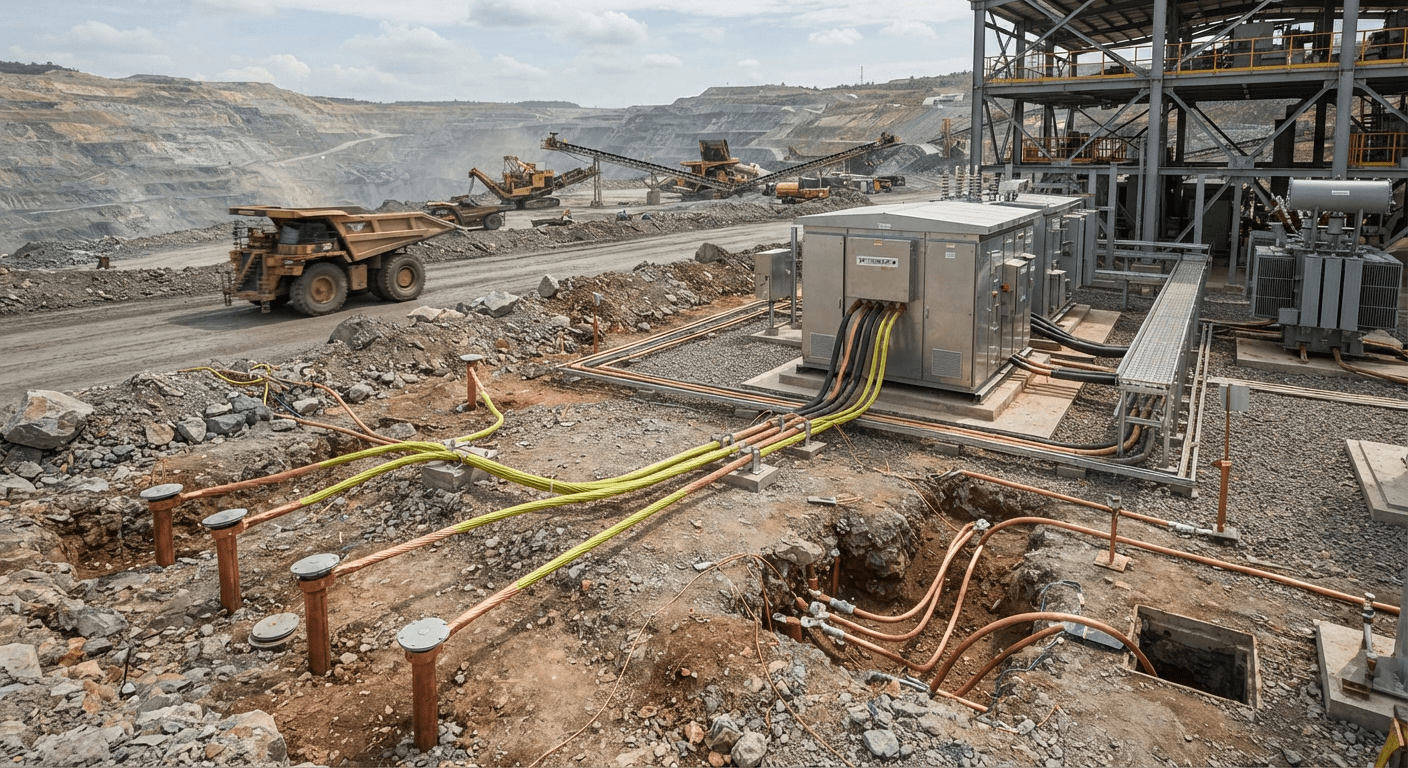


Open-pit mining environments present greater electrical risks than most industrial facilities. Large operating areas, changing soil conditions, heavy rainfall, and high-power equipment increase the likelihood of electrical faults.
One of the most critical hazards is touch voltage. This condition can expose workers to electric shock when they contact energized metallic structures.
For this reason, Grounding System Standardization has become an essential part of modern mining safety programs.
Why Grounding Systems Matter in Mining
A Grounding System provides a low-resistance path for fault current to flow safely into the earth.
This system delivers several important benefits.
- Reduces the risk of electric shock.
- Protects heavy equipment from fault current damage.
- Improves lightning protection.
- Enhances electrical system stability.
- Minimizes operational downtime.
Electrical failures in mining operations often result in production losses, expensive repairs, and increased safety risks.
Understanding Touch Voltage Risks
Touch voltage occurs when a person touches conductive equipment that has a voltage difference from the surrounding ground.
Common causes include:
- Underground cable failure.
- Transformer insulation failure.
- Lightning strike.
- Switchgear ground fault.
- Heavy equipment electrical faults.
Operators working with excavators, haul trucks, crushers, conveyors, and substations face higher exposure to these hazards.
A properly designed Grounding System significantly reduces these risks.